Woodshop Monitor
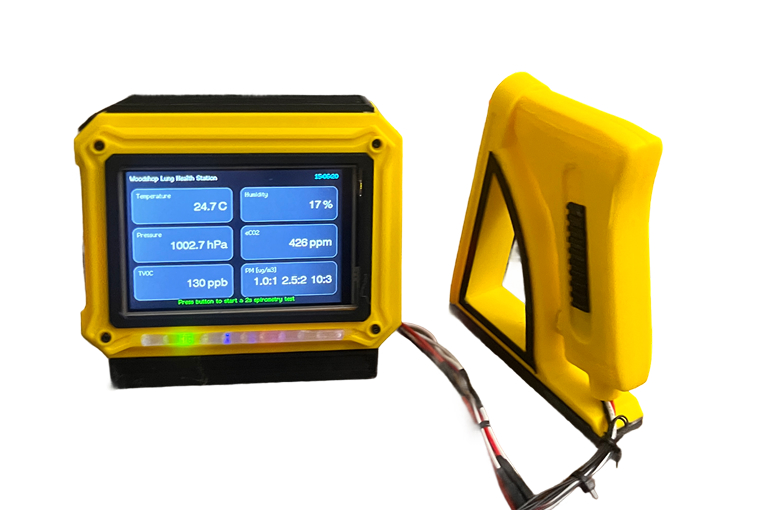
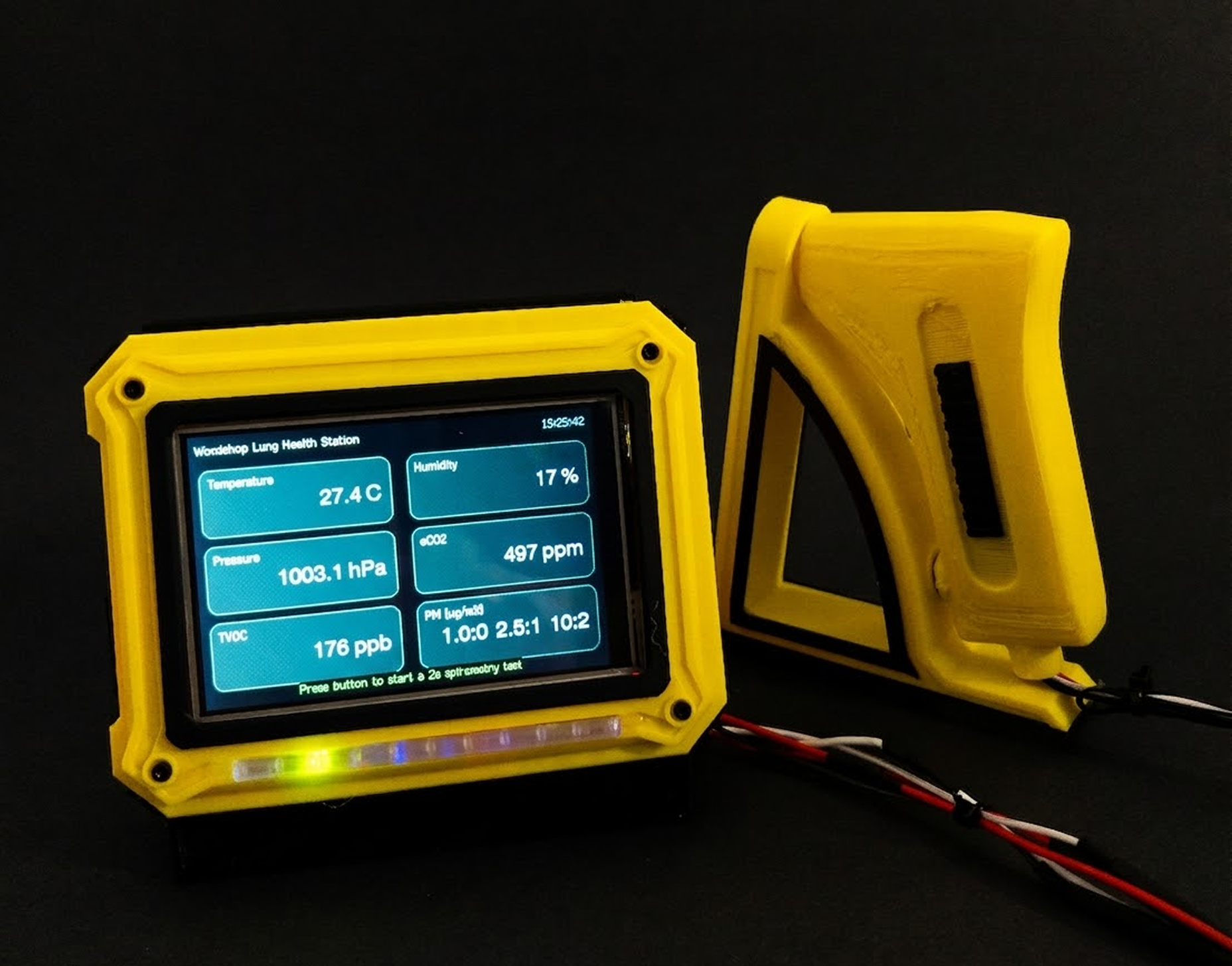
A real-time air quality and respiratory monitoring system for woodshop environments.
What you
don't see.
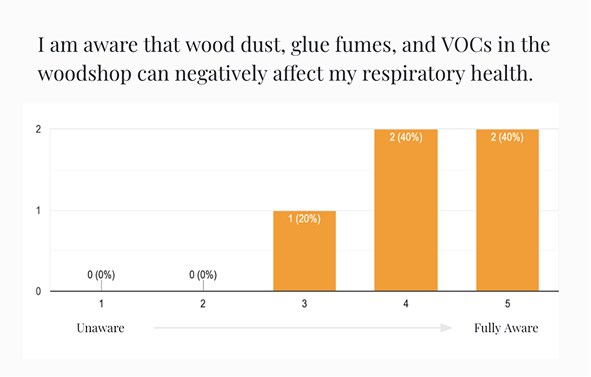
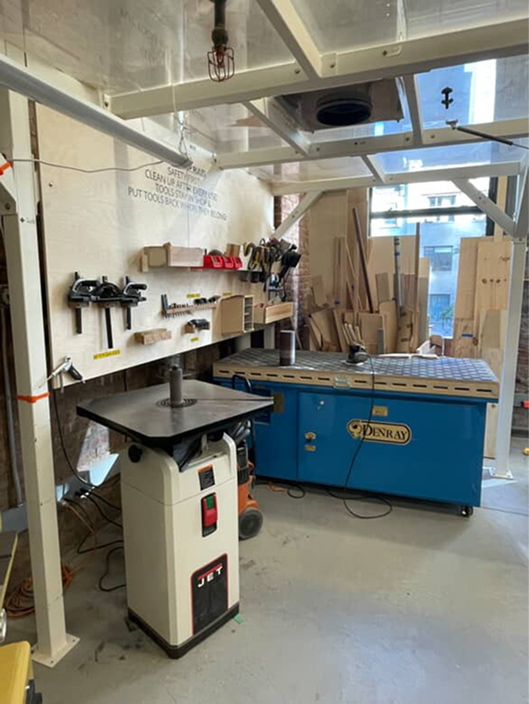
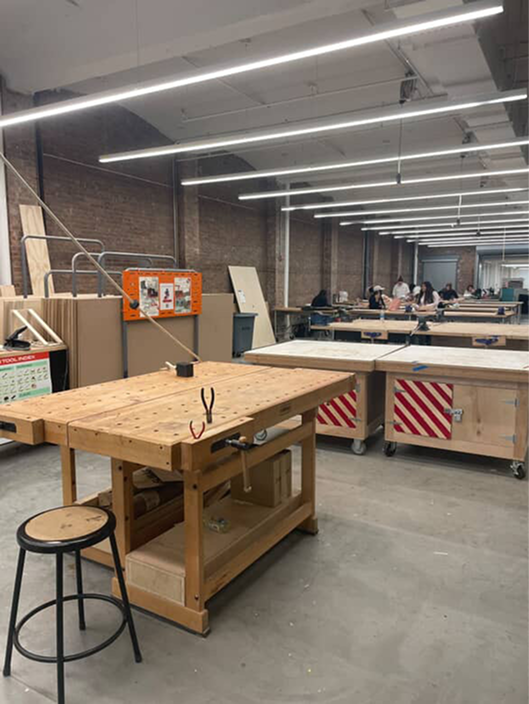
Wood dust, glue fumes, and airborne particulates are invisible hazards that woodshop workers face every day. The concern over respiratory health in woodworking dates back more than two centuries.

Wood Dust
Exposure often causes coughing, wheezing, nasal congestion, and eye/throat irritation. 6–18% of workers exposed to wood dust develop occupational asthma.

Glue Fumes
Exposure to VOCs can cause headaches, dizziness, nausea, and mucosal irritation (eyes, nose, throat). Increases risks of liver and kidney toxicity.

Air Particulates
Associated with chronic cough, heavy mucus production, and airway obstruction. Can cause allergic or irritant dermatitis and asthma.
The concern over respiratory health in woodworking dates back more than two centuries — from early occupational cancer links to modern OSHA exposure limits.

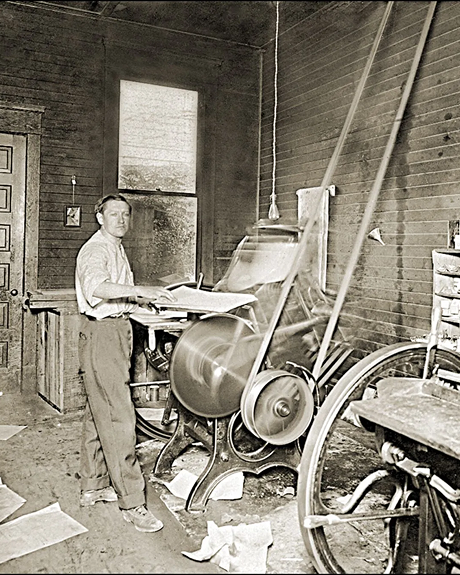
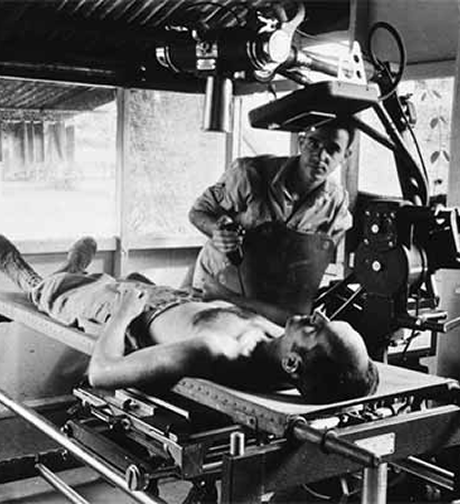

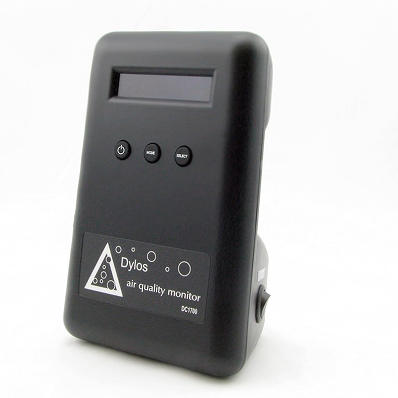
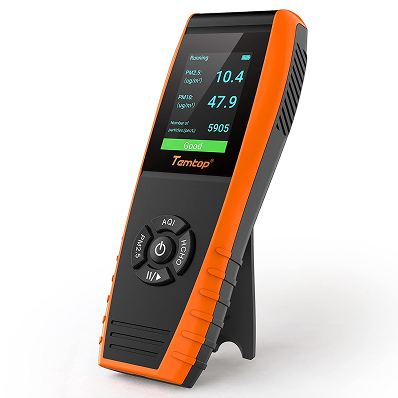
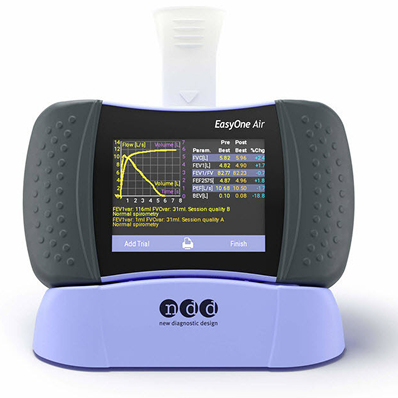
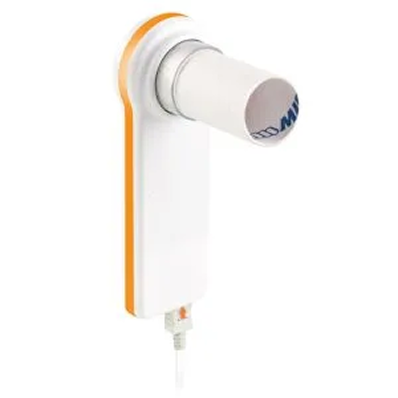
Existing monitoring devices are either prohibitively expensive, require medical knowledge to interpret, or simply weren't designed for the unique conditions of a woodshop.
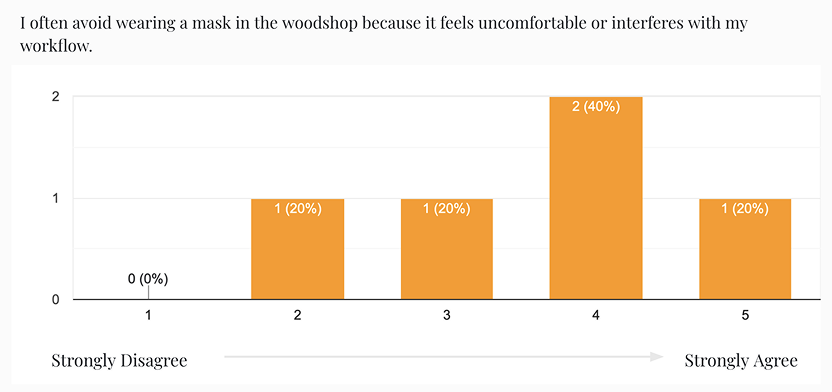
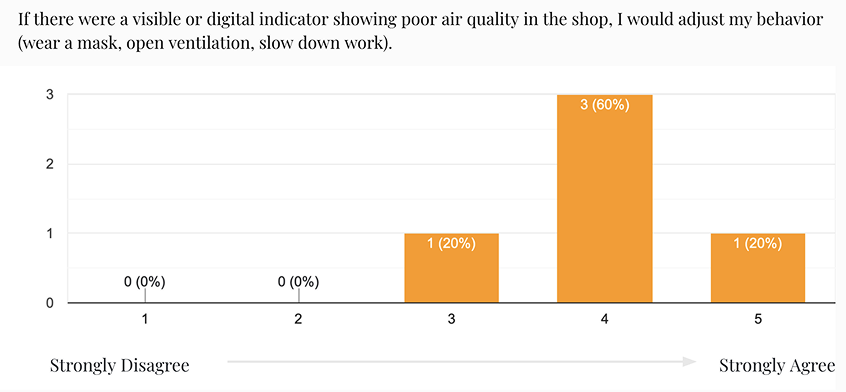

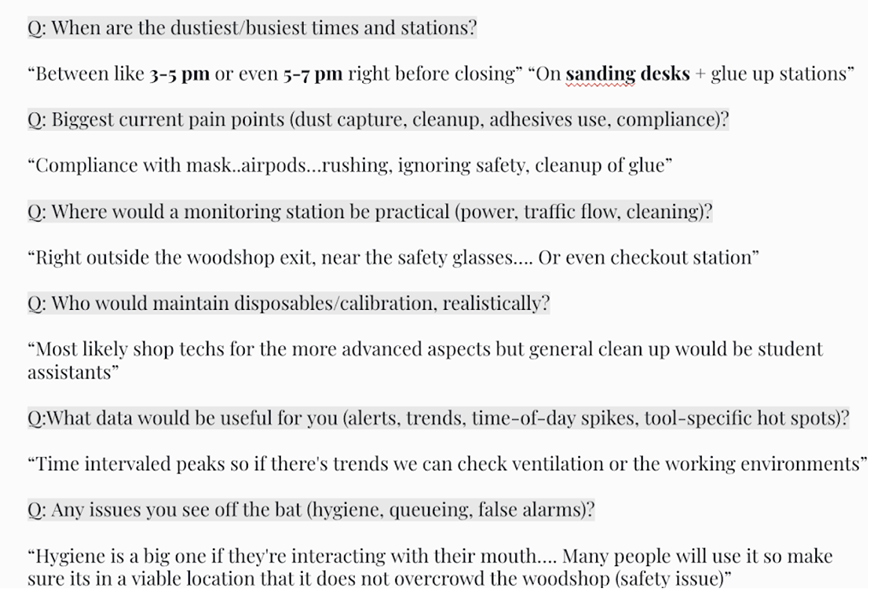
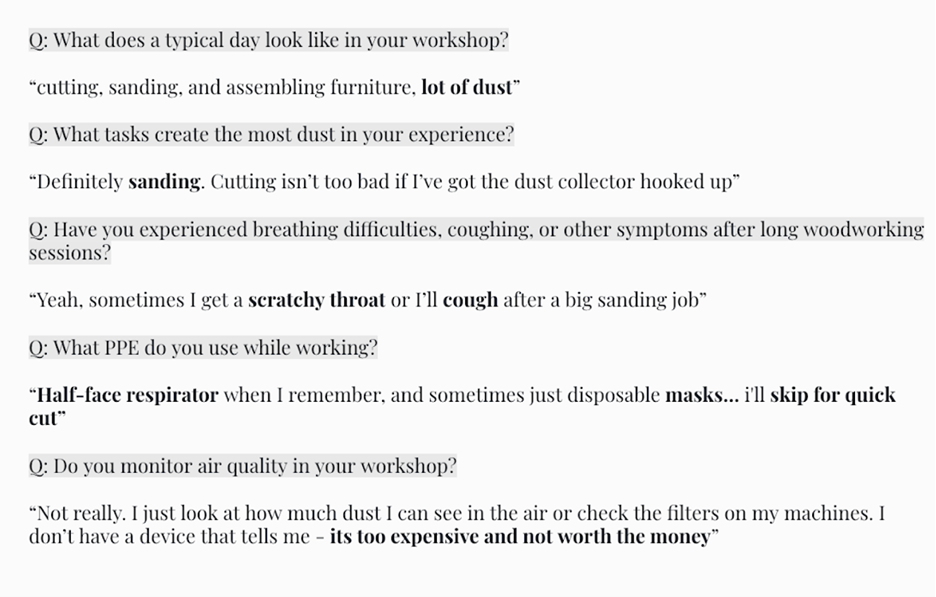
Tsunemasa Fujiwara
Wood Shop Worker — Student Assistant

Sean Yan
Frequent Wood Shop User — Student

Derek Brown
Professional Wood Shop Worker — Self Employed
Defining the
direction.
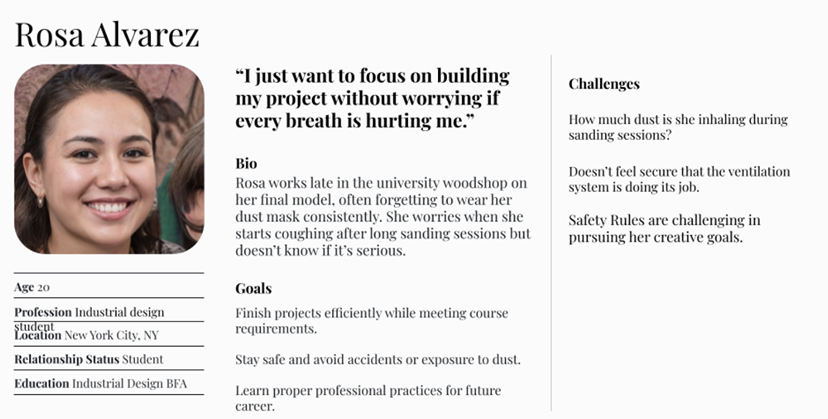
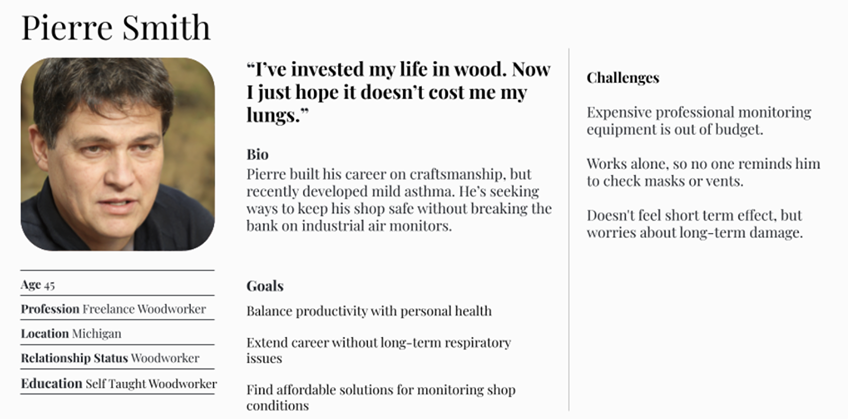
From user personas and empathy mapping through mission definition and component research — turning raw insights into a concrete system design.
.png)

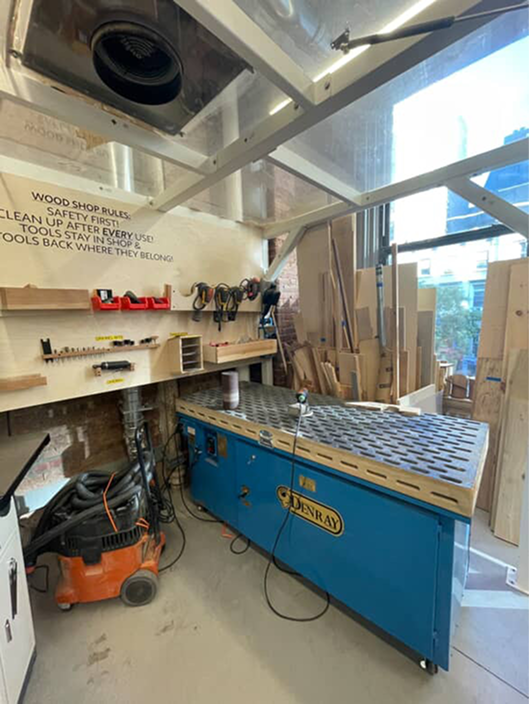
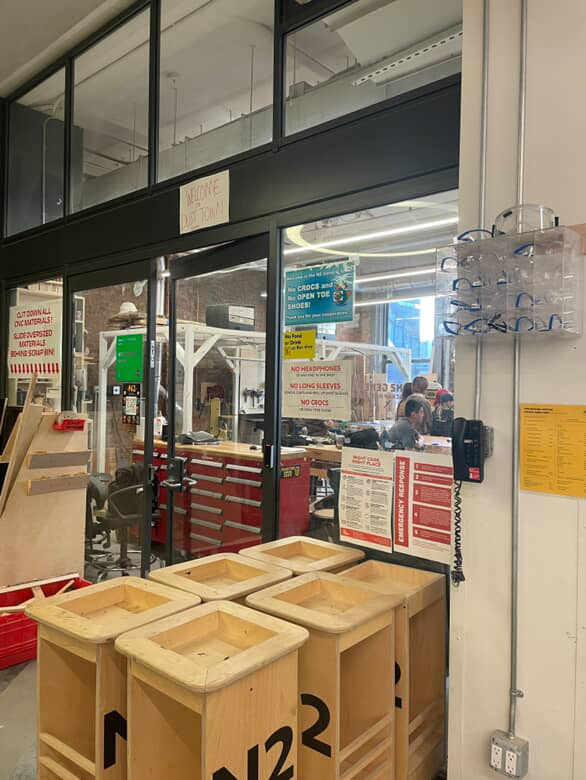
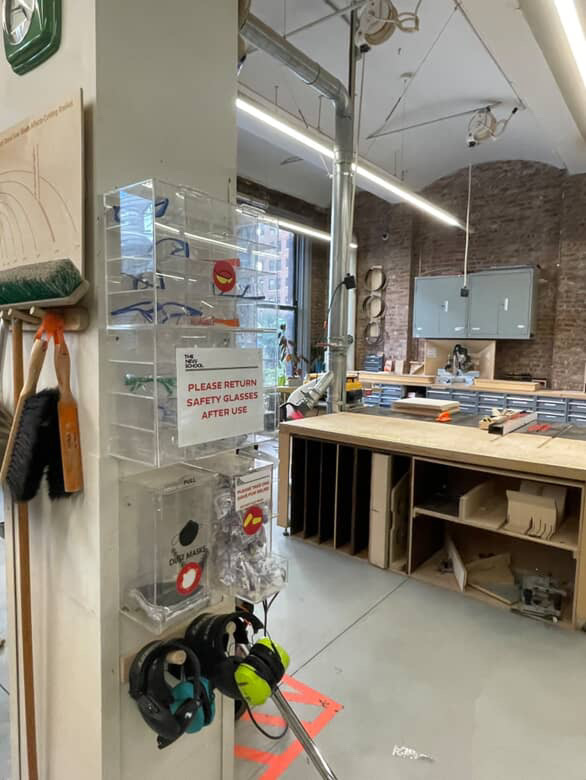
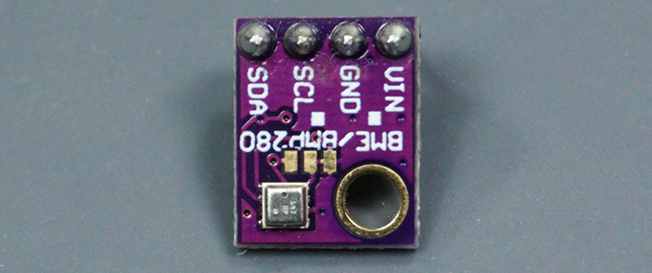
Four sensors form the core of Woodshop Monitor — measuring particulate matter, VOCs, environmental conditions, and airflow pressure to give a complete picture of workshop air quality.
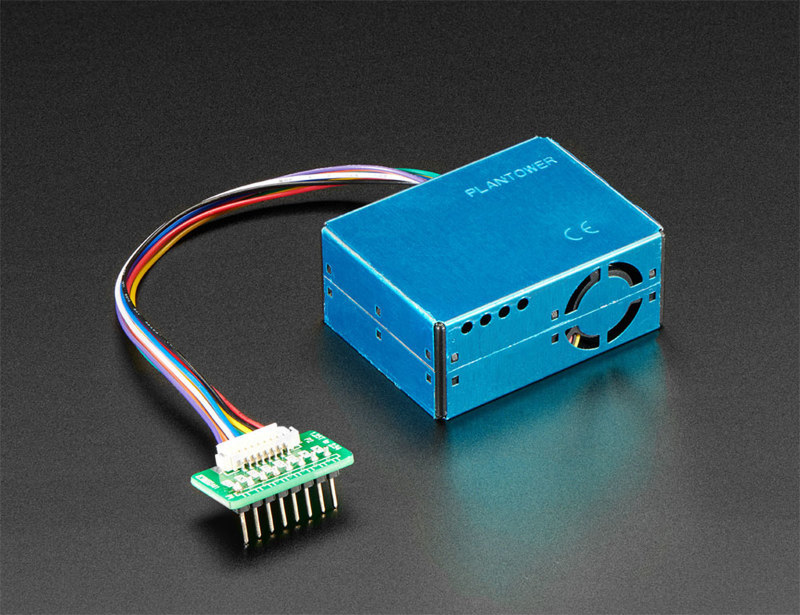
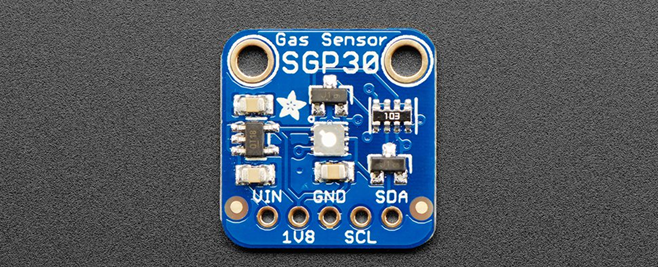
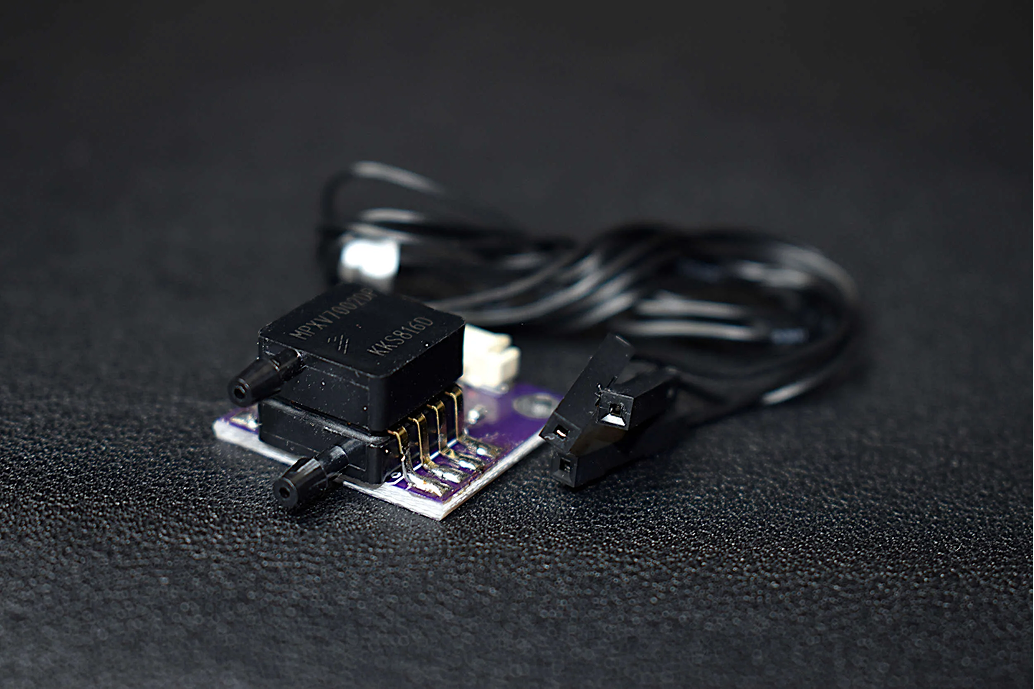
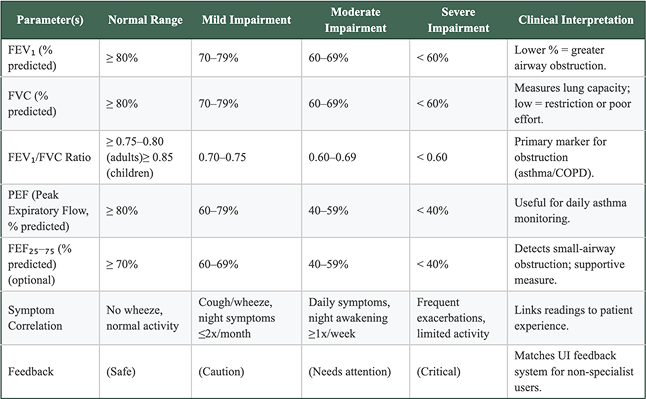
A four-step process designed for zero friction — students finish their woodshop session, take a quick spirometry reading, and get instant visual feedback.
From sketch
to prototype.
Moodboards, color exploration, thumbnail sketches, circuit testing, foam prototyping, and iterative physical development — building and refining Woodshop Monitor from the ground up.
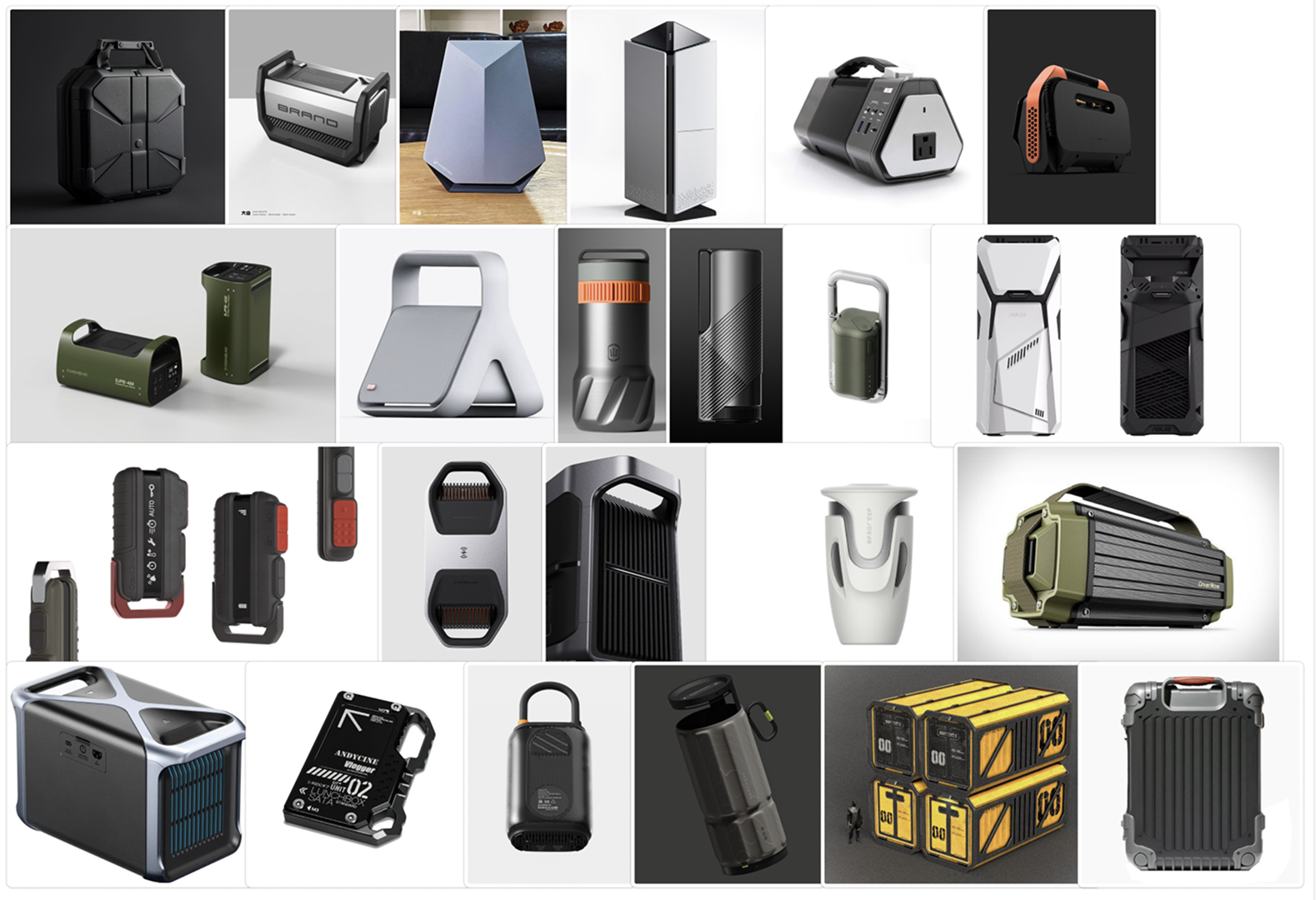


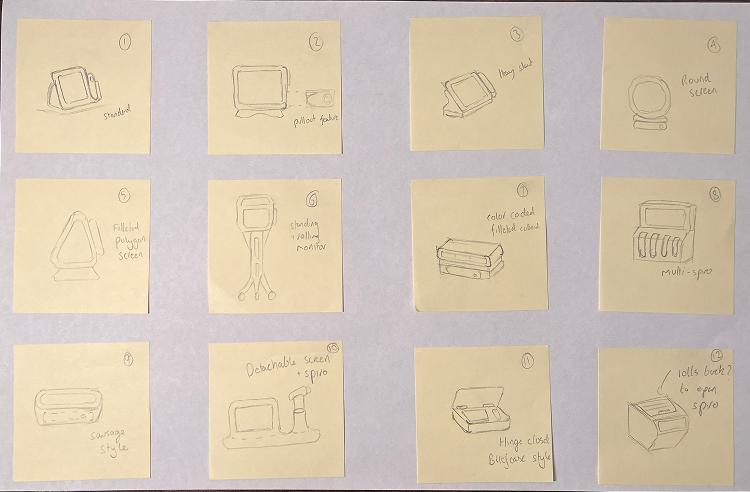
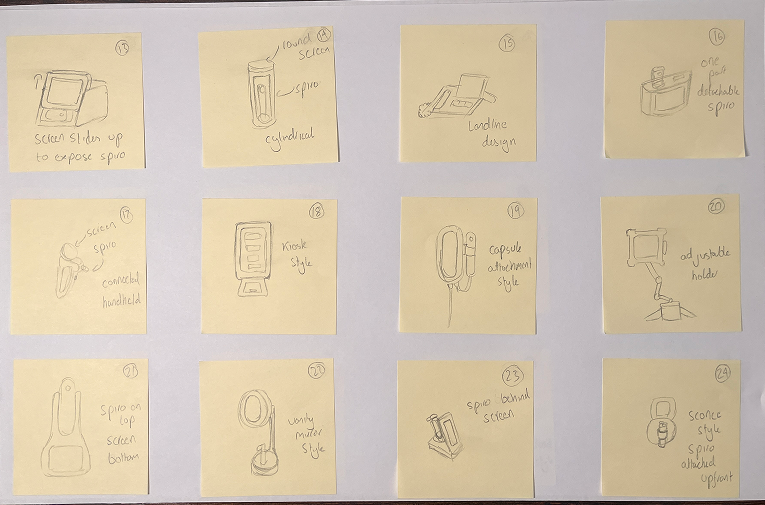
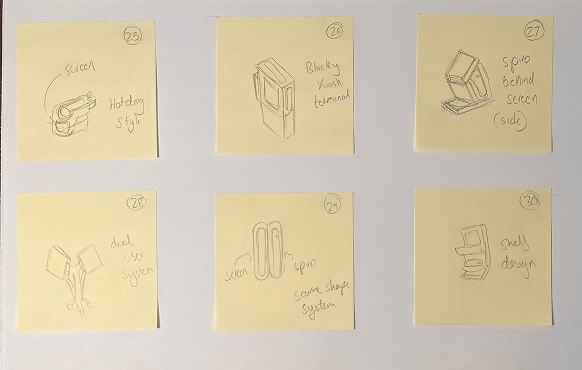
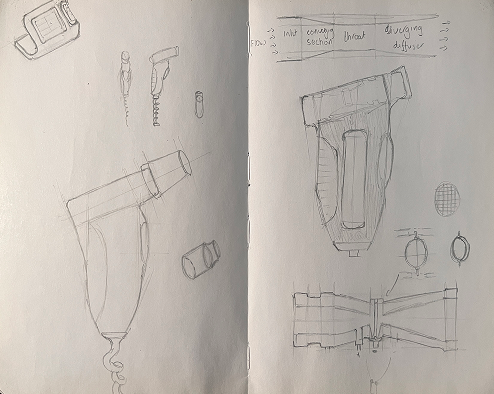
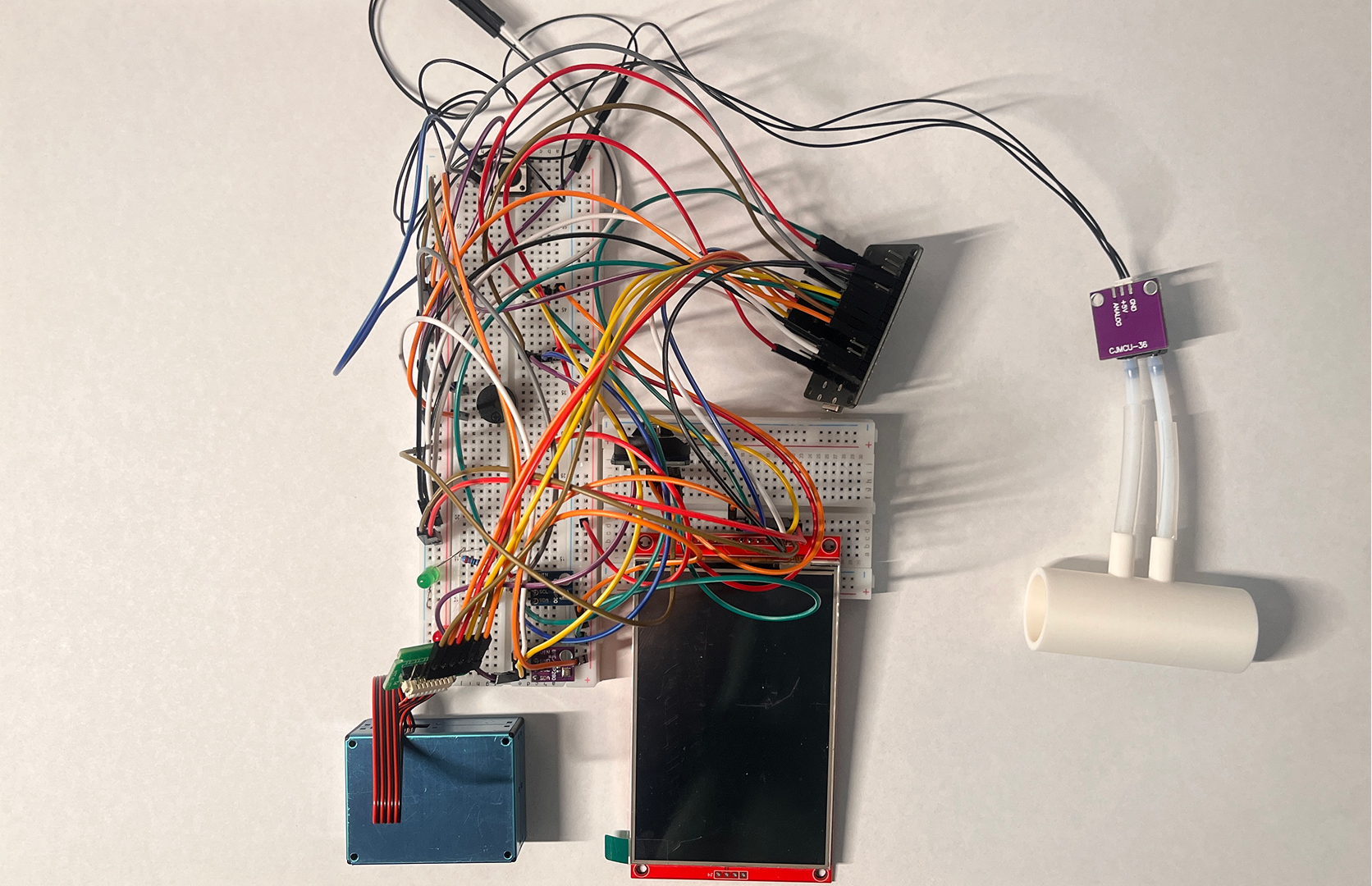
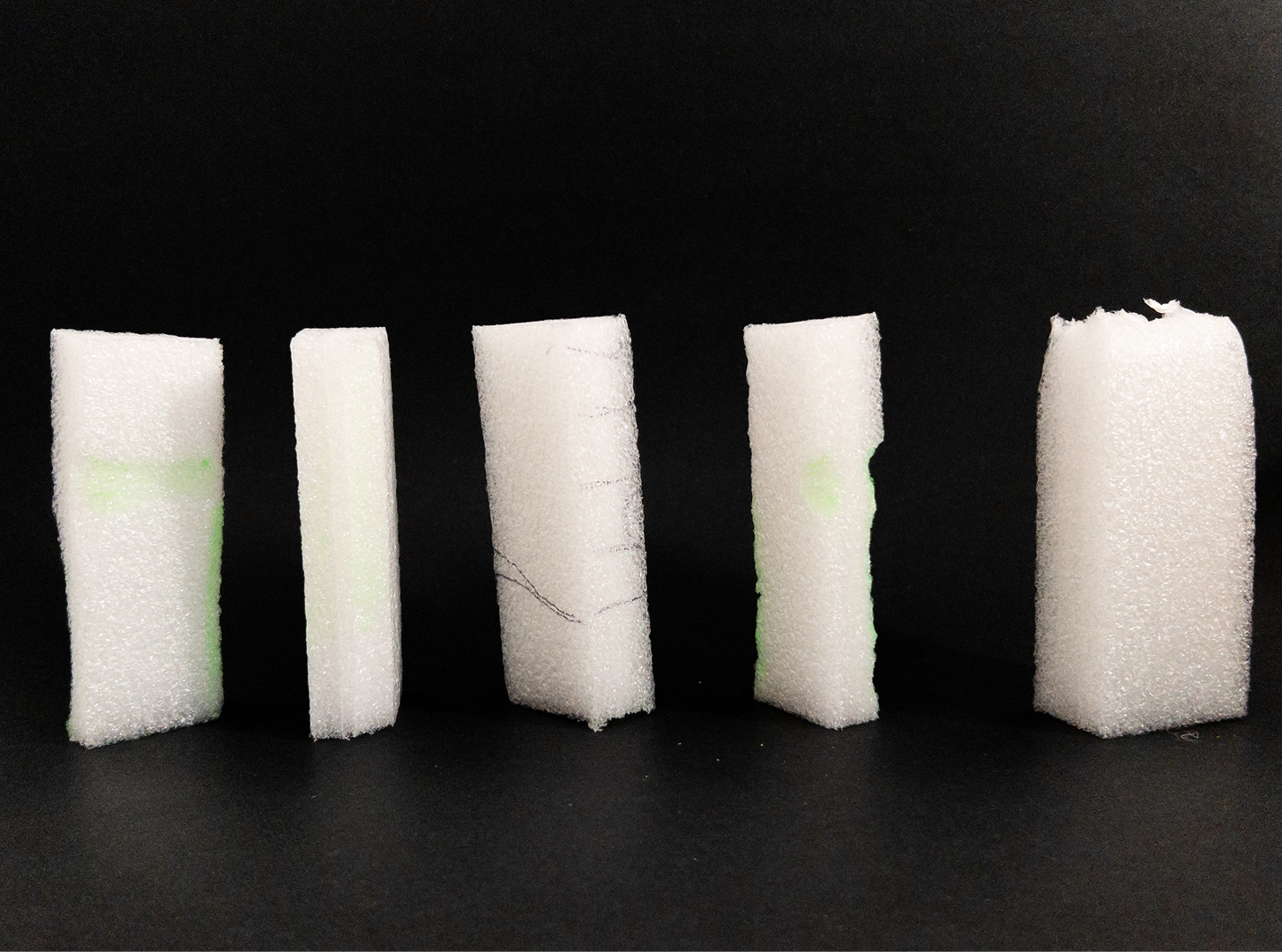
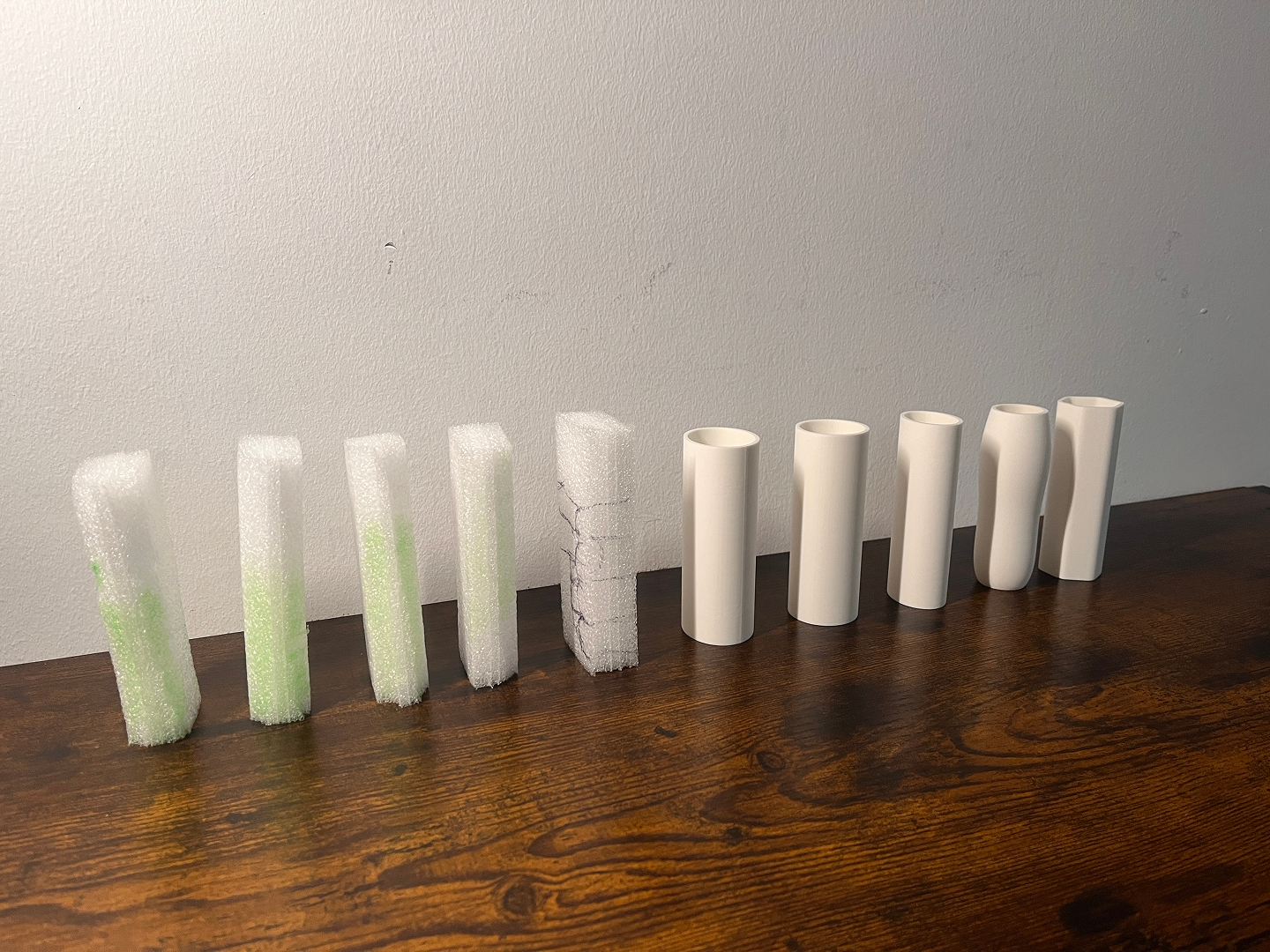

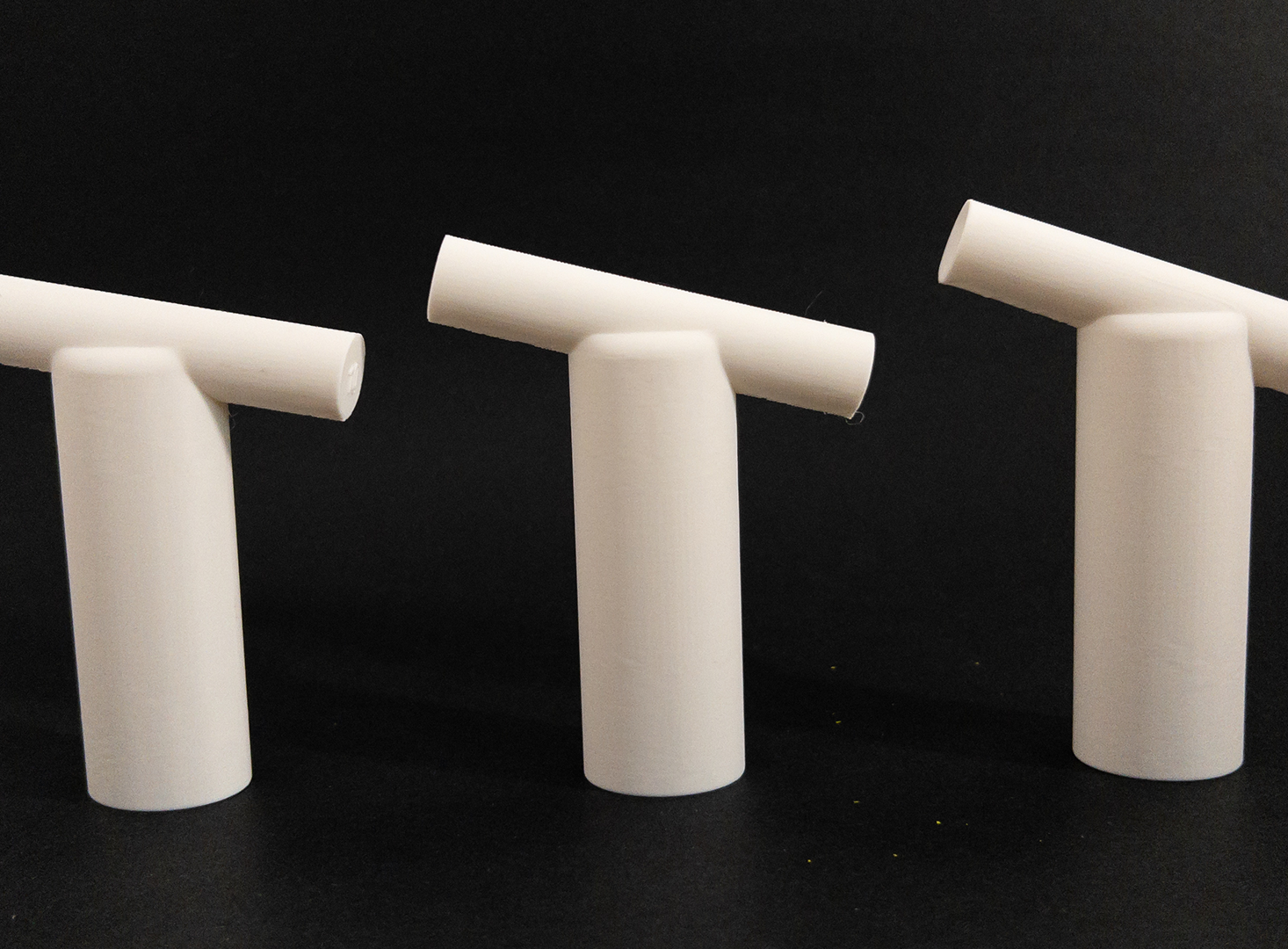
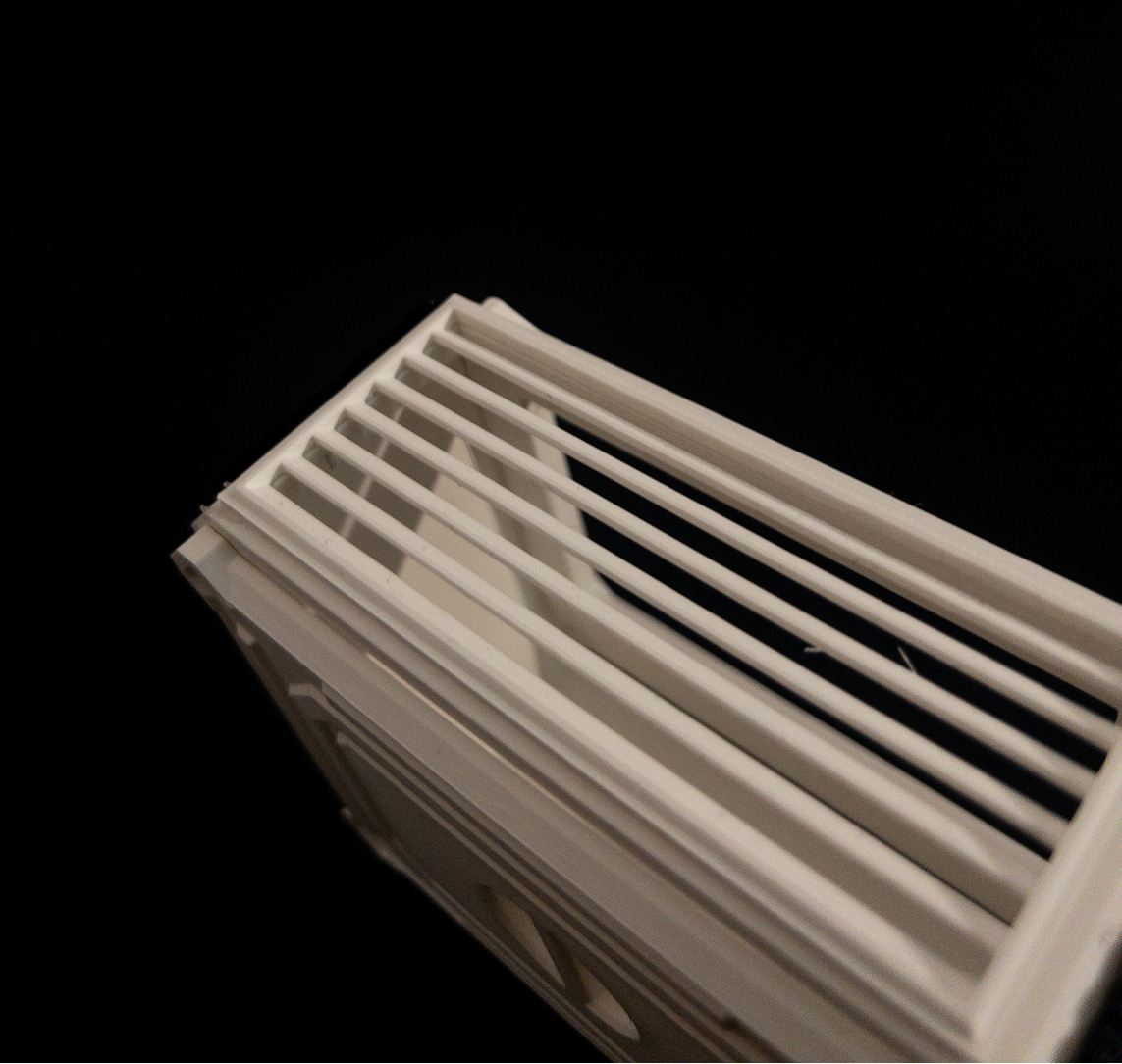
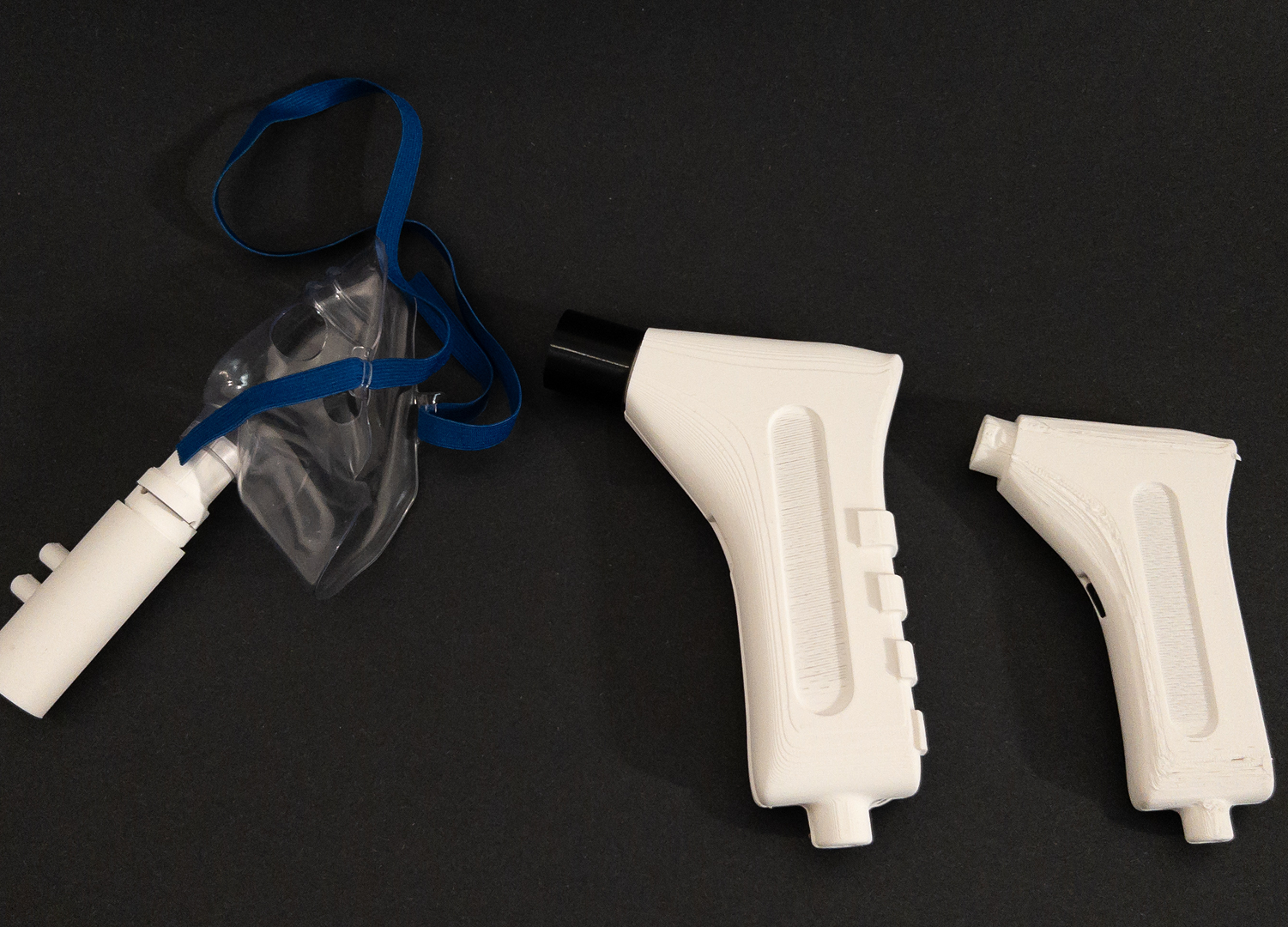
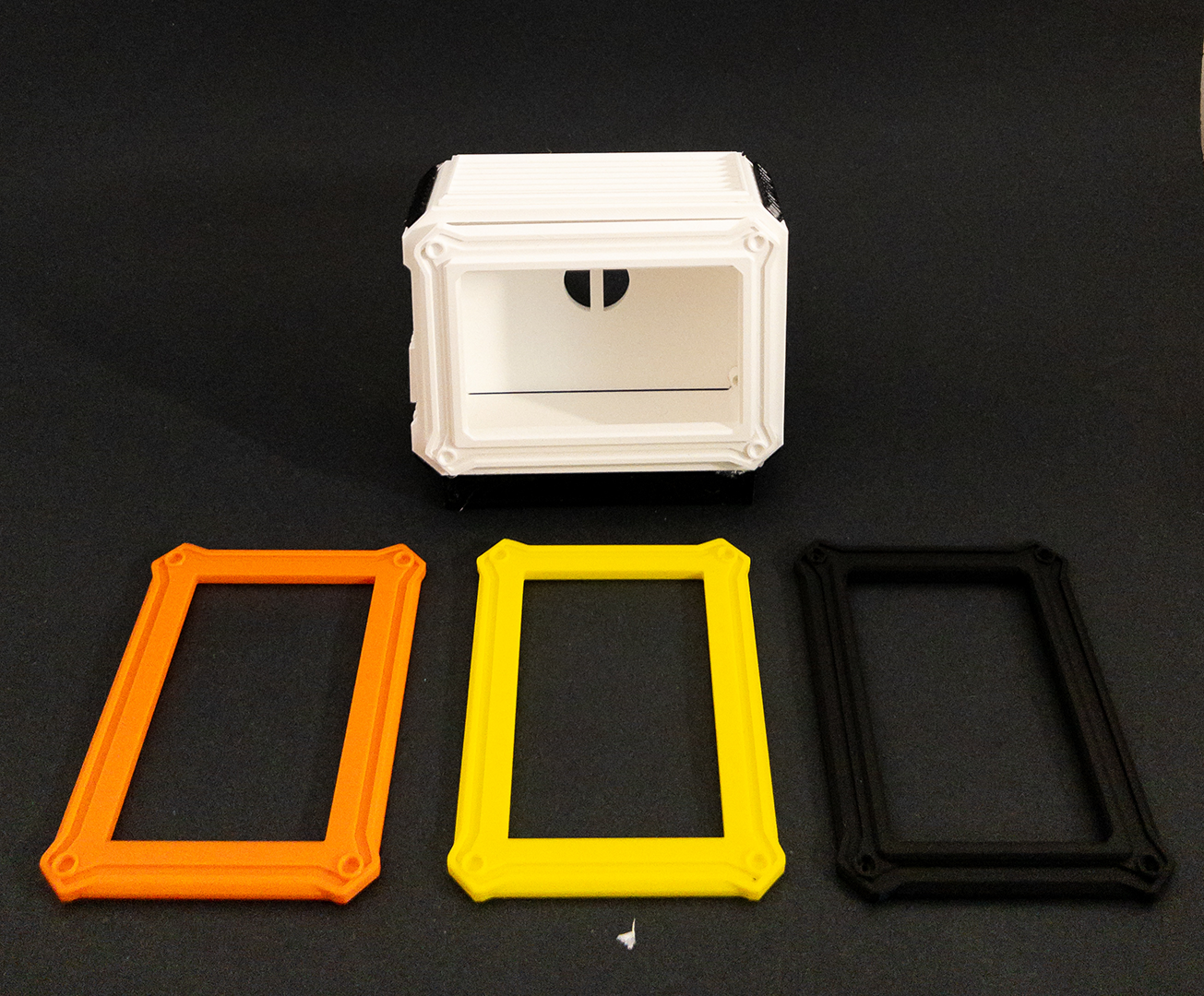
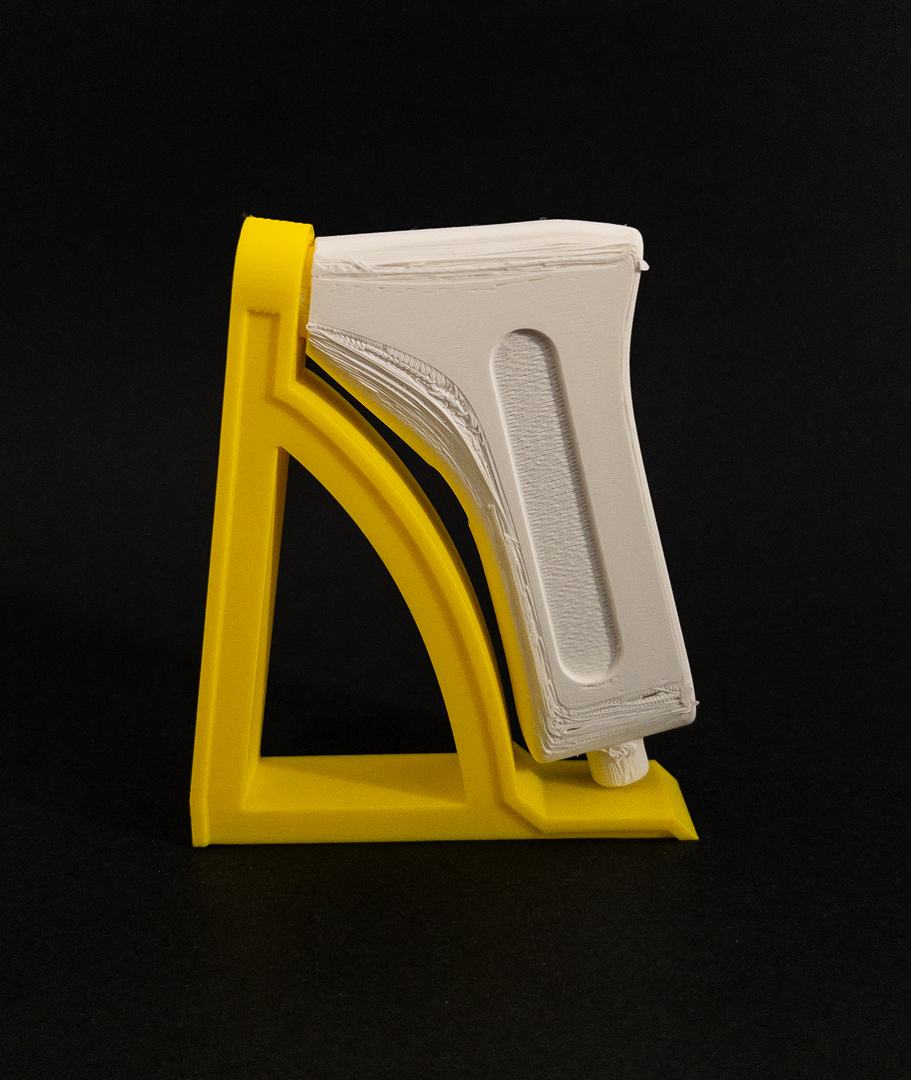
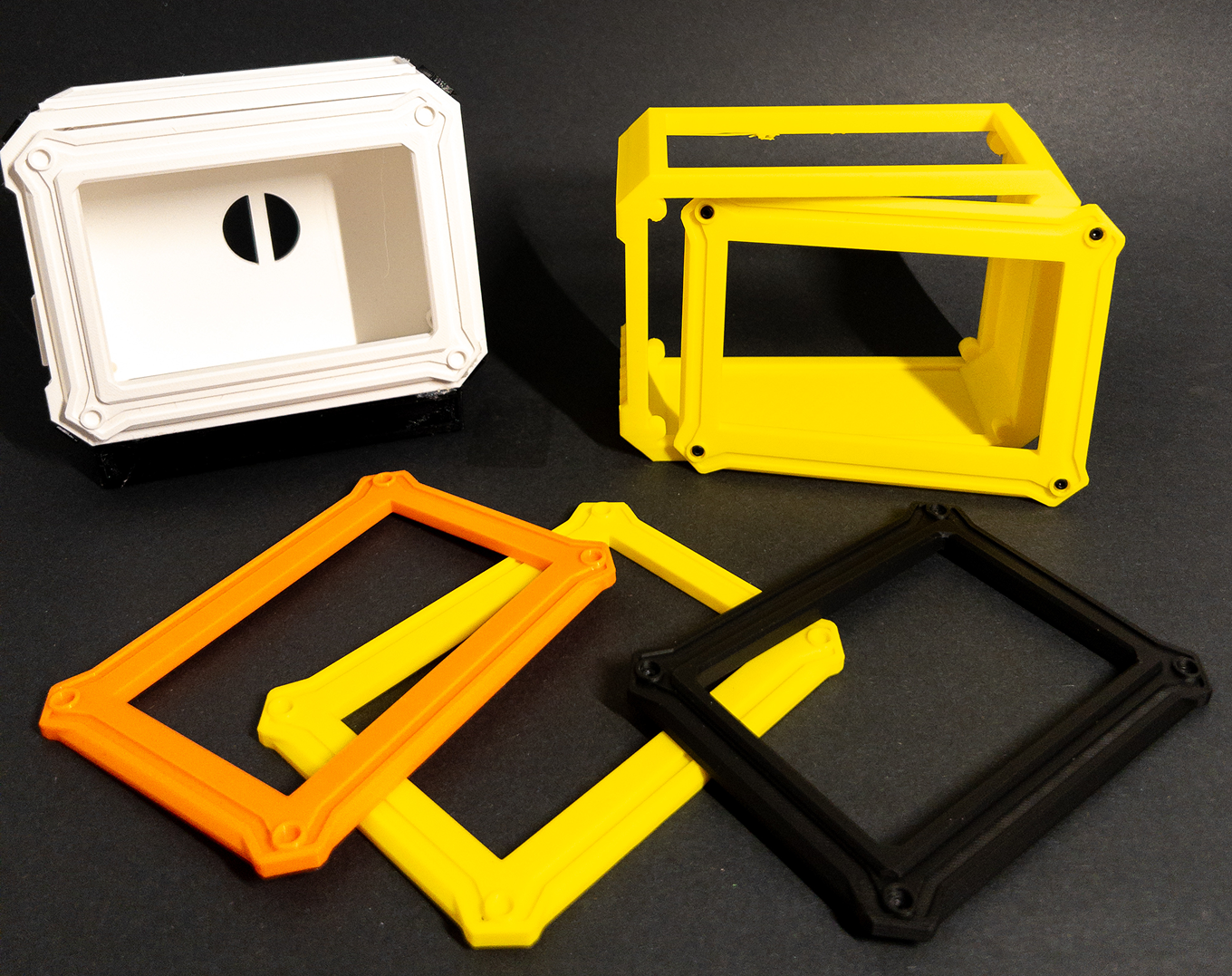
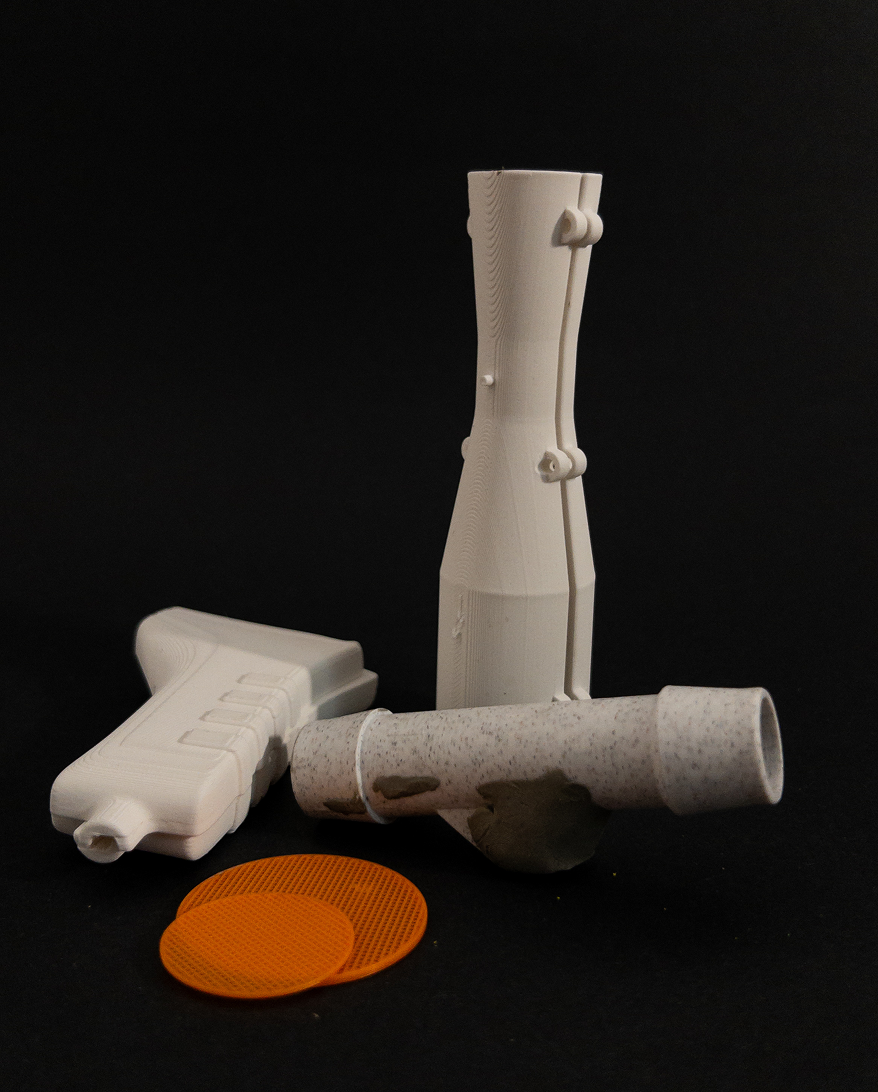
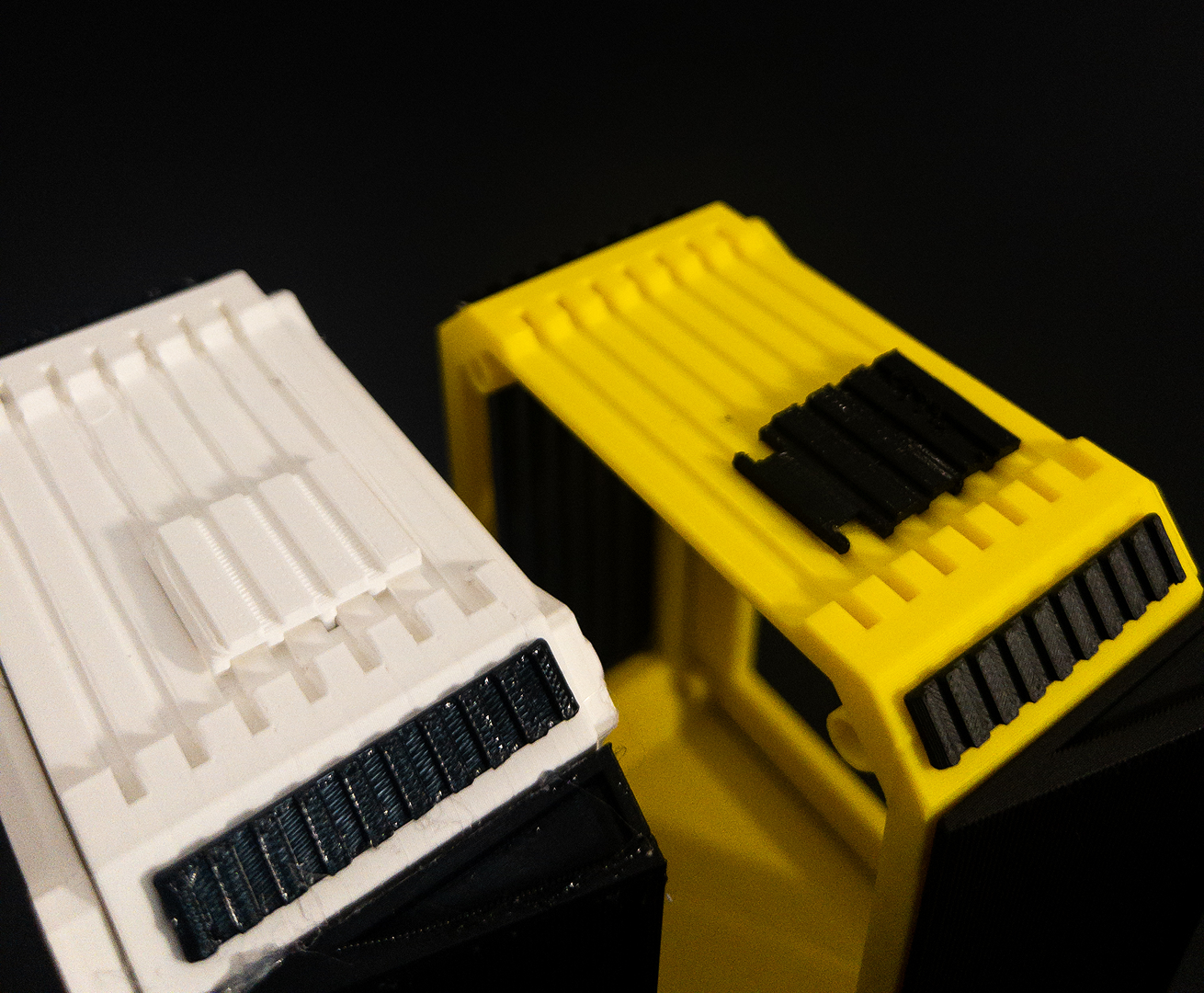
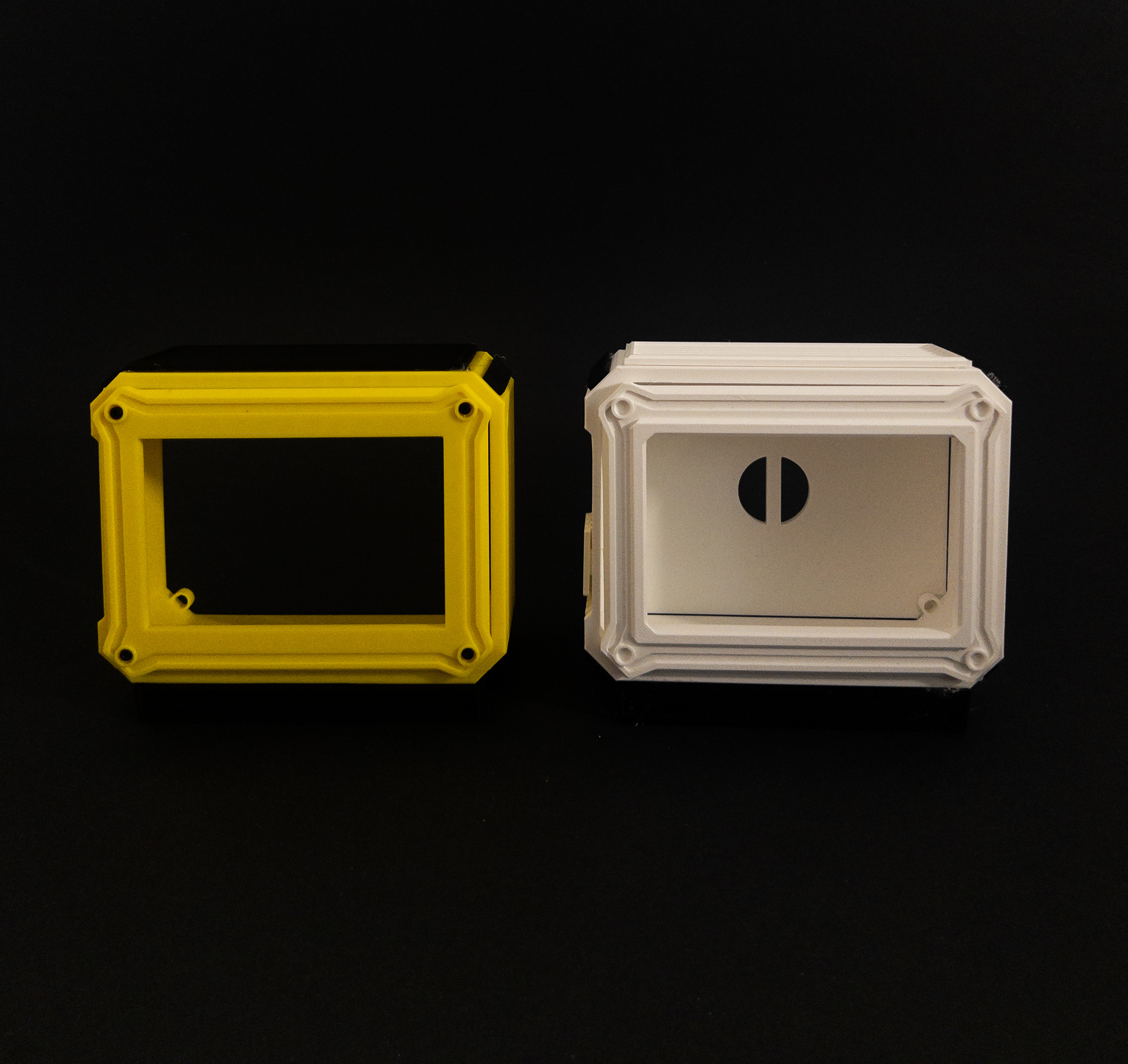
Iterative refinement across venturi tube design, mesh filters, spirometer inserts, bezel development, dock form, and vent prototyping — each component tested and evolved independently before integration.
The final
product.
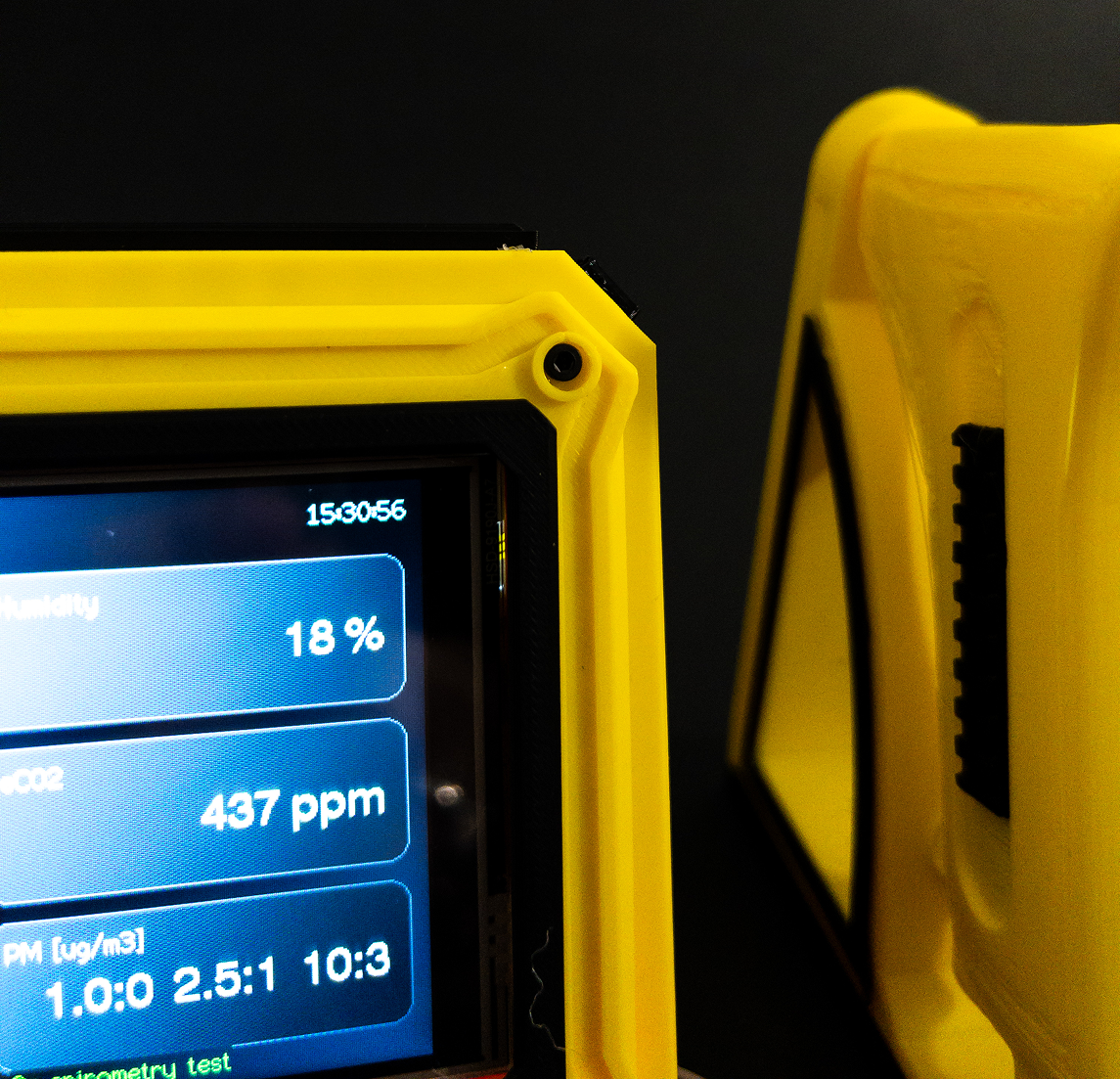
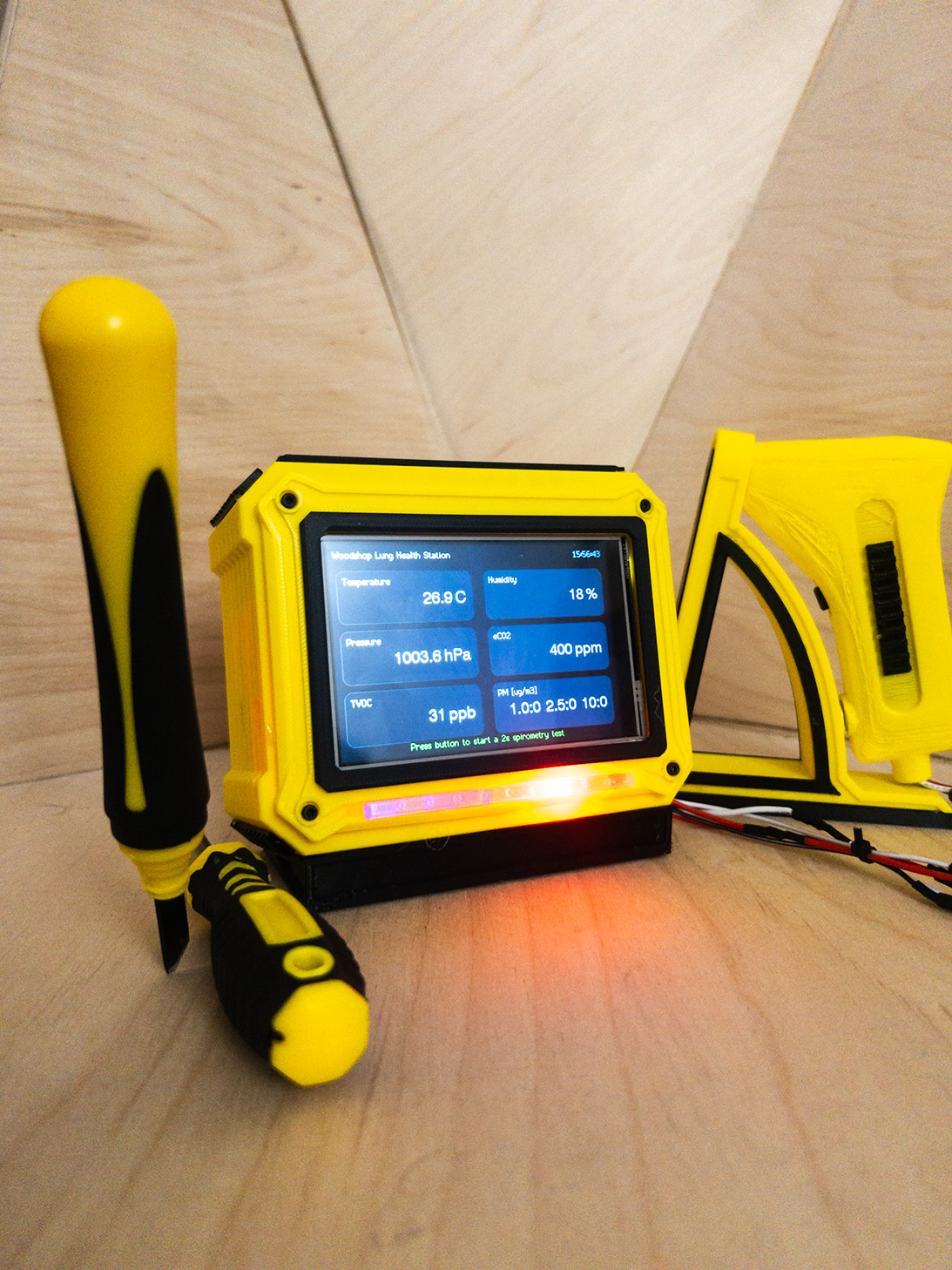
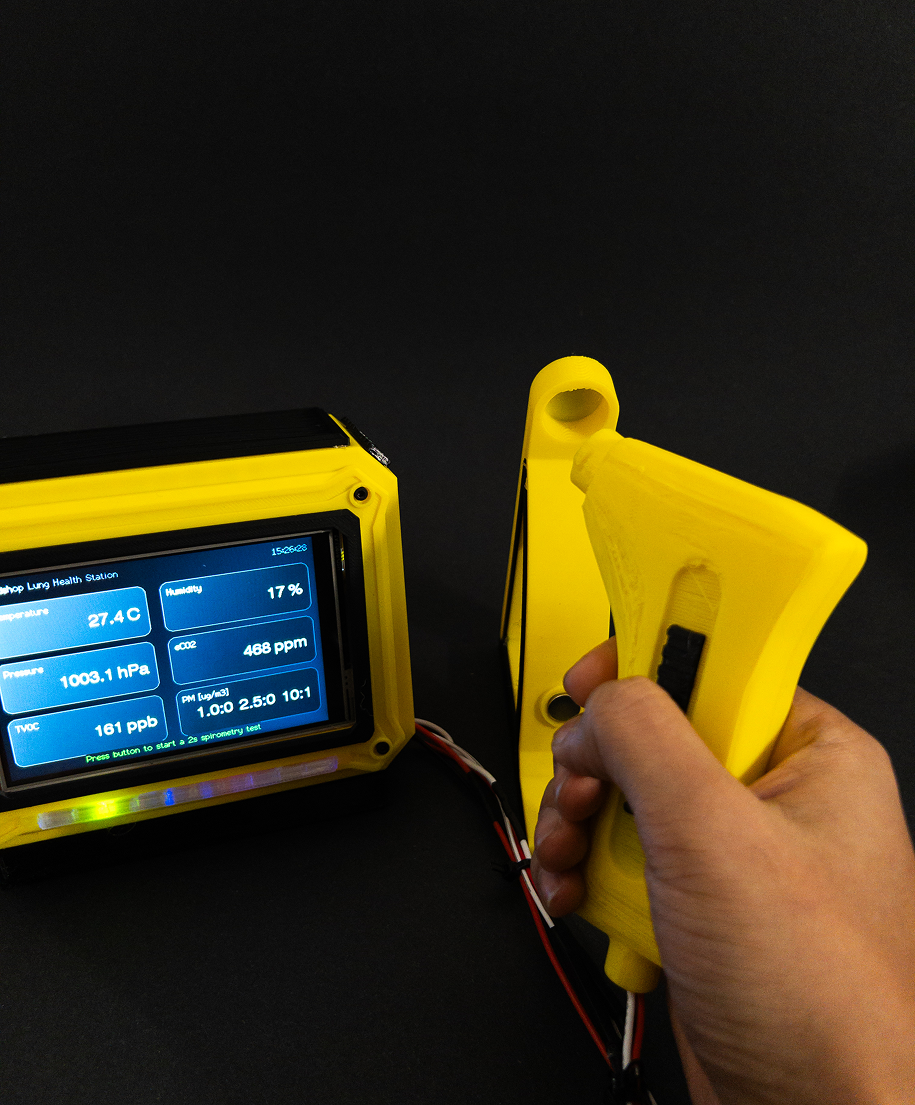
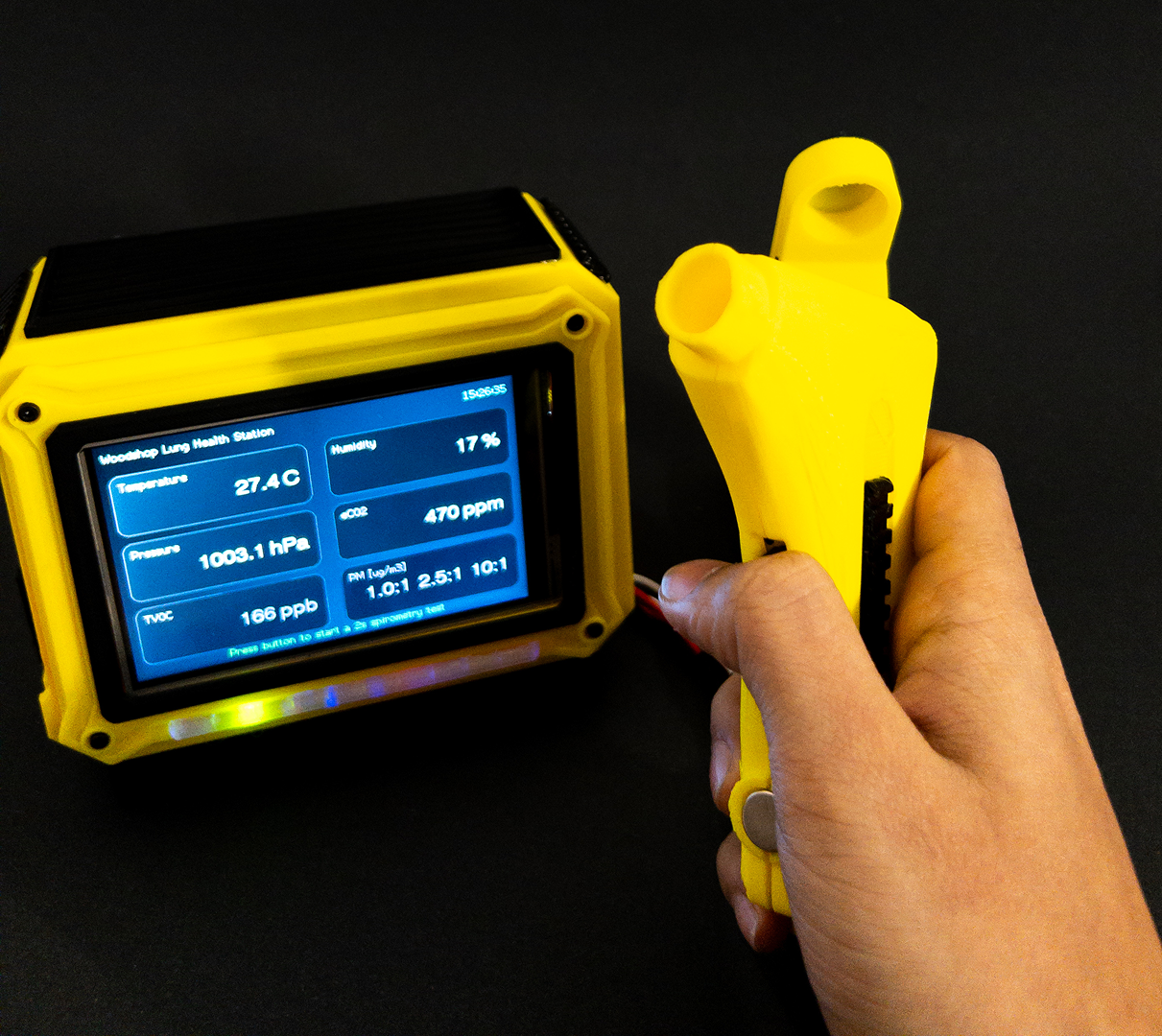
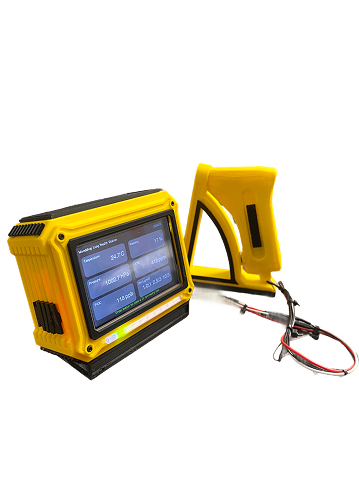
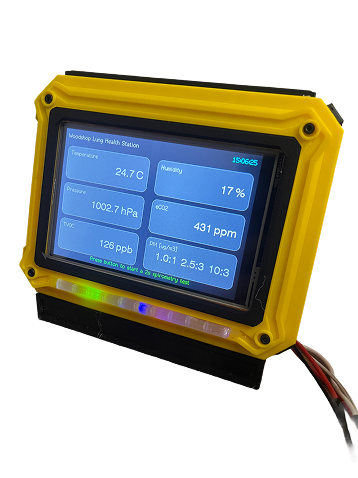
Detail shots, environment photography, and in-use documentation of Woodshop Monitor — the real-time air quality monitoring system designed for woodshop environments.